Everyone’s Hardest Things

It’s hard to walk around with a billboard showing exactly what your hardest thing is. It’s hard for it to be public and constant. Everyone has hard things, many just hidden inside; and that’s got to be hard too. I went to a baby group and I explained that Margot has developmental delays, which was hard, and at the same time I didn’t know what hard things the other moms had going on inside because Margot’s disability and my thing are somewhat expected topics of the group; theirs, conventionally, are not.

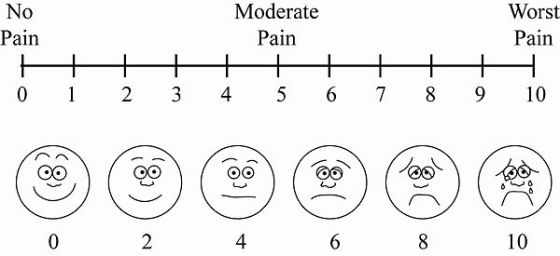
When you go to the Emergency Room, you’re asked to rate your pain on a scale of 1 to 10. If you don’t speak English or you’re not developmentally able to use such an abstract concept, you’re given a concrete rendering of the scale, as below.
pain scale

What I realized is, it’s incredibly unbiased: there are no words, just faces. It doesn’t say that a 10 is being held in a Nazi concentration camp, ISIS torture chamber, or by Boko Haram… You supply the definition of 10 for yourself. Because each person’s 10 is different and to define a 10 across the board would make triage impossible. The hospital needs to know where you, individually, are at, and I’ve realized this concept translates to daily life as well.

If I have a friend who seems to have “the perfect life” on the outside and then her children are simultaneously diagnosed with degenerative hearing loss and she grieves it like a 10, that’s because it is a 10 for her and no amount of prior “perfectness” is going to soften that blow. She has not yet personally faced such a blow, no matter how many families she has seen deal with one, and so, for her, it is really and truly a 10 and my level of compassion cannot be based on my own scale or contempt for how much easier it seems. I must empathize with the raw pain of getting your 10 redefined. I know that pain and I can be sympathetic toward it, regarding her with tenderness toward her 10.

Comparison is the thief of joy, and empathy. It is the breeder of contempt, malediction and desolation.

When I am present with Margot, I am not always experiencing my bad 10. In fact, I am now and again experiencing that ever-revising good 10! Just as I expected when I was becoming a mom, each new step brings new joy and pride and awe. The fact that the steps are (painstakingly) far between does make them very sweet indeed.

Mindfulness educators write often about tenderness. As a concept, it was very hard for me to grasp “tenderness toward oneself” and “tenderness toward others.” What does it mean to be tender? I still don’t entirely know, but I think I’m getting a glimpse. I think it’s recognizing the feeling beneath the experience and being compassionate toward that feeling because I have been there too. It’s tenderness toward the feeling of being at a 10, not judgment of what the 10 is; that’s out of anyone’s control. We don’t choose our 10s, we just have them. And when someone is at their 10 it sucks just like my 10 does and your 10 does and the horror story 10s do. That’s enough. It  will get revised again later, and that’s just another opportunity for compassion, on everyone’s part.

 

New House, New Life

Wow have we made a lot of life changes in the last few months. Blogging has clearly taken the farthest back seat, but now it’s on the new-habit-list so fingers crossed! The list also includes (in no particular order)

  • Walking
  • AAC modeling
  • Going to support groups
  • Making friends
  • Making the new house a home
  • Reconnecting with my husband
  • Writing in Margot’s journal/posting to Margot’s Tumblr
  • Doing a good job teaching 2 night classes
  • Taking care of my own health/helping my husband find time for his
  • Finding a “me thing”

Whew! That’s quite a tall order. It almost seems like there’s nothing that’s NOT included. But we’ve actually done A TON in the last 19 months, so a shout-out to ourselves is also deserved (feel free to skip the long, arduous list!):

  • Advocated for our pregnancy to go 42 weeks
  • Endured an emergency C-section due to induction techniques
  • Lived in the NICU for 2 weeks grappling with Margot’s heart defects
  • Were laid out on our knees by an unforeseen diagnosis for Margot
  • Spent 3 months in pure depression
  • Had Mastitis twice
  • Endured 6 months of colic and severe reflux
  • Exclusively breastfed for 6 months
  • Managed upwards of 6 medications a day for Margot
  • Stayed at home for 9 months with a baby who screamed bloody murder in the car
  • Patted and rocked a screaming baby to sleep upwards of 9 times a day for 11 months
  • Paced the house for 12 months holding upright a baby who still wouldn’t let us sit down
  • Watched countless developmental milestones come and go
  • Fought traffic to Boston for 49 specialist appointments (with said screaming baby)
  • Cycled through 4 Early Intervention teams looking for the right therapists
  • Stuck to a strict elimination diet of no dairy (no pizza/flatbread, no grilled cheese, no cheese & baguette, no cream sauces, no pastries, no cereal, almost no anything-already-prepared/eating out — wow we have done a lot of new, boring cooking to keep up with this!)
  • Filled out reams of forms navigating the NH Medicaid system to get Margot medical coverage
  • Went to work 30 hours a week throughout all of the above (after 8 weeks of maternity leave)
  • Felt too depressed and self-conscious to even attempt going to support groups thus becoming completely isolated
  • Took 6 trips to the ER and had 2 overnights in the ICU
  • Had Margot under hospice care when we thought we wouldn’t be able to control her seizures
  • Micromanaged our case manager for 9 months trying to get Margot an adapted stroller
  • Spent an additional x000 minutes on the phone, mostly fighting with insurance companies
  • Suffered through more iterations of “Everything happens for a reason” and “Every child is different” than I care to in a lifetime
  • Quit my job to take care of Margot full-time
  • Cleaned out 2,500 square feet to put our house on the market
  • Got organized and cleaned up for 18 showings
  • Got waylaid by numerous real estate agents and mortgage brokers, almost ending up homeless
  • Had to put down one of our dogs
  • Sold our farmhouse
  • Bought a wee little, new house in the 11th hour, alone, with Power of Attorney, by myself
  • Moved in and set up a whole new household
  • Got shingles at age 28 due to the stress of it all (no kidding)
  • Continued to breastfeed until 16 months
  • Changed Early Intervention teams again, due to the move
  • Prepared for and got through two 48-hour VEEGs and an MRI
  • Continued to fight traffic for an additional 55 specialist appointments in Boston
  • Going through third titration and taper for a new seizure med

I’m sure it would have helped some other struggling parents out there if I had chronicled the above online, but I just couldn’t make the time. Instead I coped by reading some other amazing blogs, which also deserve another shout-out:

So the goals are set and we are on our way! They seem to pale in comparison to what we’ve already done, right? There’s just one positive I’m seeing coming out of being Margot’s mom: becoming tougher and doing more than I ever through possible. For now, a bullet-style update on our progress toward each:

Continue reading

“Dropping a Nap,” aka, “Period of Extreme Mood Volatility”

Over the last week or so, we’ve gotten the impression Margot is trying to “drop a nap.” Since she got down to two naps a day, she has been getting up around 6:30am, napping around 9:30-10:15am and 1:00-2:30pm, and going to bed around 5:30 or 6:00pm. Of course this shifted easily by 15-45 minutes each day, but it was a loose schedule of 3-hour waking intervals.

This was really great, because before it she was awake for only 2-hour intervals and taking three naps. I honestly can’t remember exactly when she made the change, but I believe it was around 12 months. I could check my text message history because I’m pretty sure I excitedly told a friend about it, but I’m too comfy where I’m sitting. I do feel like that change went more smoothly, but time does weird things to memory.

Which is all to say that this time it’s no cake walk.

If Margot is successful in dropping to one nap, she’ll have to move her nap time and perhaps lengthen it. Homeostasis at work and all, this is not so easy. Her circadian rhythms – yes that’s plural, because every cell can ostensibly have its own! – all have to adjust, among a million other scientific processes I’m sure also contribute but I don’t really know about. I just realize that moving to, say, an 11:00am-2:00pm nap is a tremendous amount of work.

Continue reading

How I Sleep Soundly at Night

So, clearly, if you read my last post, you know this ain’t happening any time soon (and I can’t remove the “Click Here,” FYI).

life binder

Ha!

I do, however, have a less-stylized set of documents that keep the Kelly family train on course. This is not so much a “Special Needs Binder” but rather, morbidly, the stuff I want my partner to be able to access if I were “unavailable” to play conductor any more (read: dead, but, who knows, maybe I’ll take a vacation).

Note: this is going to break all sorts of information security rules (“rules”) but it lets me sleep at night.

Continue reading

Parenthood in the Iron Triangle

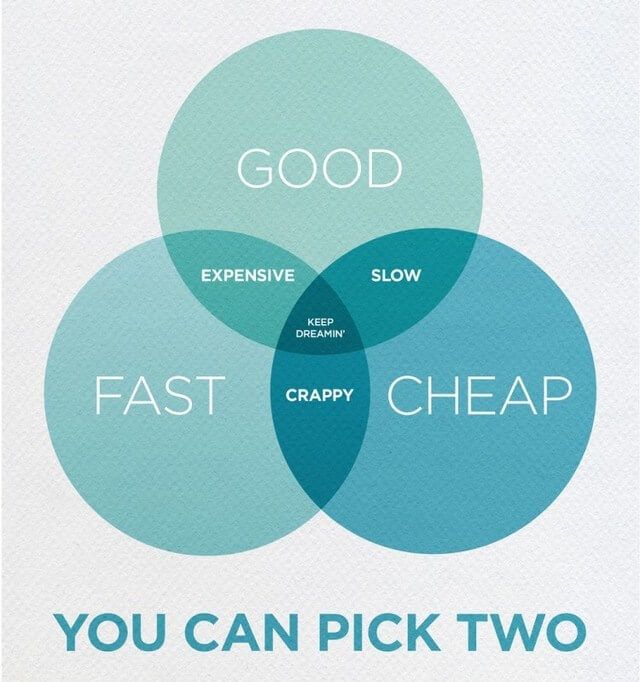
When they say being a parent is a full-time job – and that being a working parent is like having two full-time jobs – they really were right. And as such, like any project manager, we encounter the so-called “Triple Constraint” of quality: scope, cost and schedule.

In short, the amount of time I have for a given “project” is affected by and affects my “budget,” in this case energy, and the outcome or end result. It’s a three way street and each constraint is in competition with the other two. As Wikipedia so aptly puts it, increased scope typically means increased time and energy; a tight time constraint could mean increased costs and reduced scope; and a tight budget could mean increased time and reduced scope.

Hence, the “Pick Any Two” model (in this case, think “energy” where it says “cheap”).

the pick two model diagram

This rule was in full force today. Departing from the exact terms of the model, I basically rocked it in some departments which left me depleted and wanting in others.

Continue reading

Some Ideas from Earlier in Her Development

Looking back, there are some toys and materials that I really credit with helping in some developmental areas. Of course, there’s no Holy Grail of development and these may not help others the way they seemed to help Margot, but I sure know Googling for baby development ideas is annoying so I have to contribute! (Click for videos/links).

Margot and her o-ball were inseparable for a long time. I eventually stuck a foam letter in the holes too so she had something she could chew on. The holes were easy to grasp and she just loved to manipulate it. Available here.

I give so much credit to this mobile for her self-feeding hand-eye coordination! The physics of it are really complicated but it’s so rewarding when she catches it and gets to gnaw on the wood. (We did have to lengthen the main cord.) (Also, she started out very slow with this skill.)

Learning to “feed” herself was a huge step thanks to the silicone feeder I found. She had to learn which end had the good stuff (cantaloupe here) and work those mouth muscles to suck it out 🙂

Spoon feeding is still in progress, but it all started with these bendy spoons. We didn’t actually need the bending action but the size and material were/are perfect. We are just moving on to one with more grip as she does more and more herself (though the shovel on these are huge!).

This combination of laundry basket and piano was great for some sitting practice, an upright view of the world, and sustained attention/cause & effect. She moved onto the keyboard but this was a good start!

Just a household staple, this mirror helped with rolling, occupying herself, and pushing up on her forearms!

Not pictured above but that she still LOVED:

This baby faces book has the cover torn off and the corners chewed to pulp and it’s still a perennial favorite. We bring it EVERYWHERE to calm, distract and entertain.

The colorful rings were fine, but the center black and white ring, oh my goodness that was so intriguing to her when she was tiny. It was the first thing we presented for her to try to grab that she actually went for.

When she was teething, this “toothbrush” was constantly heard squeaking away. It has satisfying textures and the right amount of give, plus she could reach it way back to the molars! Yes, she gagged on it a few times BUT she learned not to do that to herself anymore. She also learned to turn it around which was great for her hand development.

Some Good Ideas of Late

Lately I’ve been happy with a few more ideas we’ve had. I so often feel like I’m trying to balance “development” with just enjoying life, and some of these come closer to that sweet spot than others. I wonder what it’s like to just play and not feel that you have to be working on something simultaneously.

The keyboard from Goodwill was a great idea from Daddy:

keyboard

Taking out a toy we already had and using it piecemeal led to some fun exploration and finger/thumb isolation:

links with holes

Observing that Margot used awesome new muscle groups when her desired objects were placed down low off to the side instead of up high (found it one side is also way stronger than the other, hrm…)

down low placement

And the button came from our AAC appointment but the musical/choreographed Christmas lights were all Mama’s idea:

music and lights

We also got outside to explore (and gag on) fall leaves:

leaves

And some friends had us over for a lovely November campfire (ahhhhhh 🙂

campfire

Our AAC Journey in Pictures and Videos (aka, How PT, OT and SLP Are So Frustratingly Connected)

In the week leading up to 2015 Apraxia Awareness Day, I read a few different blog posts and series about the Speak for Yourself app for the iPad. Then, the app was on sale for 50% off and I decided to take a leap of faith and buy it. Margot didn’t even have a SLP or OT at that point (more on that another time perhaps) but, being a language teacher, I was confident and convinced enough to just try it. Her PT chimed in with some very unhelpful negativity, though, so before I gave her the app I “tested” her with a recorded message button (I don’t know the technical term for it): Starting with the Button (5-18-15, 11 months old)

She took to it right away, and so I programed the app and started talking with it. Pretty quickly, she started recognizing the voice as meaningful, and funny: Noticing Pronunciation (5-24-15) (So funny!!)

And then started making the connection between the voice and getting something she wanted: Making Connections to the App (5-27-15)

We got her to the point of generally swiping at “more” but we were frustrated with her fine motor skills, so Daddy took a little break to teach her to use two hands to grab her bottle herself (after many attempts with many different styles of bottle, we settled on the Medela breastmilk bottles). This was so great and I credit him to this day. It did, however, lead to a regression in speaking through the app and we got to experience several weeks of screaming as communication (not included): Losing Communication to Gain Fine Motor Skills (8-7-15)

Then the 21 Day AAC Challenge came in to jumpstart us again. We had exclusively been modeling at the table, and for lots of good reasons, I swear! Margot can’t sit independently and we don’t have a stroller for her (more on this later perhaps as well…hmm there’s a pattern developing), so trying to use the iPad anywhere other than her highchair is really hard (and she hates being in her highchair other than to eat). But I finally got the idea to get on the floor with her and try to model that way. She also can’t push up on her forearms or hands for more than a couple seconds, so I used this picture on purpose to show that it’s not the most engaged modeling from a visual standpoint.

modeling more 9-8-15

A New Way to Model (9-8-15)

She started getting really into wanting to use the iPad, but her ability to target icons seemed to be really holding her back. You’ll see different levels of masking and unmasking words as we tried different things, but I decided it was time to target some fine motor skills after watching her bat around at the screen so much: CommunicatIVE If Not CommunicatING (9-9-15)

She was finally cleared to try chewing so Cheerios seemed like a natural next step: More Fine Motor Development (10-13-15)

And of course we can’t ignore gross motor development and cause & effect, so TapSpeakSequence with pictures of us and my voice singing “You Are My Sunshine” has been in perennial use:

gross motor and cause and effect 10-12-15

Continuing with Gross Motor and Cause & Effect (10-12-15)

Then we finally had an appointment with an AAC specialist at Boston Children’s Hospital. She wanted us to try low tech versions of words to make it more direct for Margot to communicate, but Margot actually wasn’t at all interested in the buttons. I did, however, come up with a tactile addition to the iPad in the form of Wiki Stix:

varied supports 10-30-15

Trying Low Tech and Tactile Support (10-30-15)

I also got on Pinterest and made some toys to try to target her fine motor skills. She needs to follow through on actions and develop different grips/isolate fingers. The “guitar” wasn’t really a hit but she likes pulling out the shiny, crinkly raffia (when she doesn’t get super frustrated and screech 😉

fine motor toys 11-1-15

Continuing to Look for Ways to Develop Fine Motor Skills (11-1-15)

The Wiki Stix have been a boon to her targeting (she has some unquantified level of vision impairment, perhaps more on that later), and she’s been tolerating the chair much more on the floor:

wiki stix 11-3-15

Wiki Stix for Tacticle Feedback (11-3-15)

But best of all has been reading her a personalized book of faces that I made her! They’re all two-touch words though, so I plan to make a personalized core words book next:

best modeling set up 11-10-15

Modeling as We Read (11-10-15, 17 months old)

Any other parents/therapists out there working on AAC with someone with a lot of other delays? I’d love ideas and insights. My #1 goal is communication but in our case gross motor and fine motor development are just so intricately connected. We aren’t making as much progress as I’d hoped for in the 6 months since we started…

Facing toward the Sun

For Margot, learning to turn her head away from the sun has been a steep learning process. She so prefers to turn her head to the left to sleep that the struggle to learn seems to be a raw internal battle. Sitting in her carseat, facing left means looking out the window; riding in the Ergo, the walking parent will inevitably pass through sun and shadow, walk north and south. Her desire to face left is always to the detriment of her sleep, which she desperately needs as a result of her neurochemistry (both natural and synthetic). So I wonder, has she not learned cause and effect; can she really be so oblivious to the solution to her problem?

At the same time, do I want her to grow up thinking the world is fair, and black and white, and that she can avoid discomfort so easily? She can’t both face left and have the sun out of her eyes; it’s a paradox, a catch-22, real-life. I could guard her, but longterm I would fail and it would be worse, more shocking, to suddenly have the full force of the sun in her eyes after such a long time of protection. And who’s to say the sun in her eyes is all bad? The sun can be a warm, relaxing blanket over your face if you let it (and the rest of the conditions are right). Or facing it may provide the light to illuminate something yet unseen. No one can say it’s unequivocally good or bad to have the sun in your face when you are trying to nap, and maybe she knows that. I need to trust her, not question her and worry about the developmental implications of whether she turns her face.

sunny eyes

Insult to Injury: Can’t Even Recognize a Compliment

I guess I’m used to getting bad news and negative responses. I’m primed for them now and just assume that’s what’s coming when I talk to providers.

Last week we had a visit from Special Medical Services to evaluate Margot’s feeding and swallowing. It was also the first in-take with the Speech Language Pathologist (SLP). Knowing they’re going to want to watch Margot eat, I switched her lunch (solid food + expressed milk) with her snack (milk only, either nursing or from a bottle). So in walk three women I’ve never met before, right as I’m trying to get the thousand feeding accoutrement together, half of which I have to wash first: booster seat, napkin, bib, spoon, tea cups (great baby-sized bowls), mug, hot water, nipple, silicone feeder, tether, carrots, sardines, applesauce and chia pudding. And they want to weigh Margot. Immediately.

So I’m already flustered and assuming this is going to be another frustrating encounter. But I eventually got us all seated and started feeding her and somehow managed to answer a bagillion questions. Halfway through, one says, “Wow, she’s really flexible.” Of course, I don’t know the SLP definition of “flexible,” but my response it, curtly, “Yeah, that’s the hypotonia. It’s not a good thing actually.”

She meant Margot has a flexible palate. For taste. And texture. This is a great thing! And true! And I missed it!

Margot sucking on her "melon stick." We fill it with mashed cantaloupe and she bites/gums/sucks out the juice. It was the first thing we got her to bring to her mouth. I credit it with making the connection that hands can be the source of food!

Margot sucking on her “melon stick.” We fill it with mashed cantaloupe and she bites/gums/sucks out the juice. It was the first thing we got her to bring to her mouth. I credit it with making the connection that hands can be the source of food!

They went on to praise my prolonged breastfeeding efforts, which I also tried not to accept recognition for (I basically have to nurse her since she’s allergic to cow’s milk, regardless of the dietary limitations this means for me). And the homemade purees I make her (I couldn’t bring myself to give her veggies pureed in water when I could do them in homemade stock to aid brain development, and I have control over the pesticides used on them without breaking the bank). And even my garden (I think it basically looks fallow but they felt otherwise).

I had three women falling over themselves to praise my parenting (which I should have loved!) but all I could do was see the negative or feel judged.

This may just be part of my world view – more than a little skeptical – but I think it also illustrates how negative so many visits with providers have been over the past 11 months.

Thinking back the words echo nicely in my ears and I do feel bolstered as a mom. It was just so strange, and in the midst of a typically difficult situation. The whole meeting was 2 hours, too; 2 hours of a barrage of questions from three people with separate agendas. And they did keep mentioning concern for Margot’s weight (too heavy) couched in acknowledgments that she is only “eating such good food” and that we don’t “give her any junk.” And there I remember how judged I felt. What a Catch 22.